
India's lubricant industry is undergoing a quiet but consequential technical upgrade. Across blending facilities, procurement teams are asking a question that barely registered a decade ago: is this a Group I or a Group II+ base oil?
The answer now has regulatory and commercial consequences. Here is what the shift means and why it matters for India's lubricant supply chain.
Understanding the Base Oil Groups
The American Petroleum Institute (API) classifies base oils into the following groups based on composition and performance parameters.
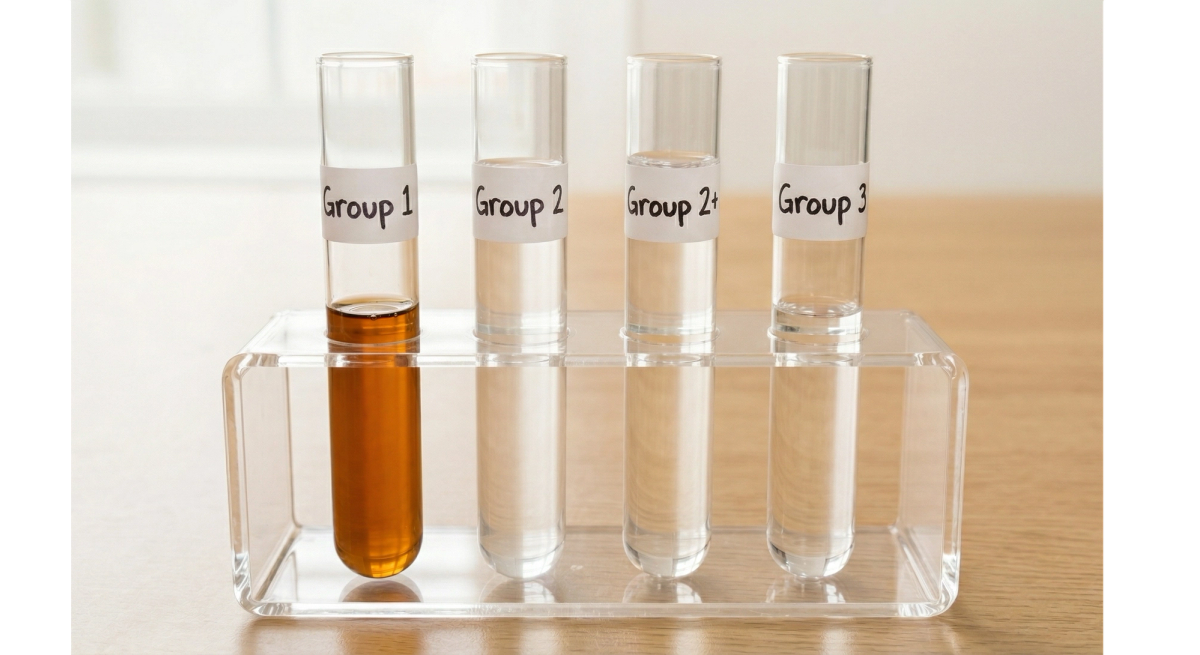
- Group I base oils: Produced through solvent refining, these oils contain less than 90% saturates and more than 0.03% sulfur, with VI typically between 80 and 120. They retain a higher proportion of aromatic compounds and have comparatively lower oxidation stability.
- Group II base oils: Manufactured using hydroprocessing, these oils contain at least 90% saturates and no more than 0.03% sulfur, with VI also in the 80–120 range. They offer significantly improved oxidation stability and cleaner performance compared to Group I.
- Group II+ base oils: While not an official API classification, Group II+ is an industry term used for high–viscosity index Group II base oils, typically with VI in the ~110–119 range.
- Group III base oils: Subjected to more severe hydroprocessing, Group III oils maintain high saturates, low sulfur, and VI above 120, approaching synthetic-level performance.
Why Higher-Quality Base Oils Matter in the BS-VI Era
India adopted BS-VI emission standards in April 2020, equivalent to Euro VI, skipping the BS-V step entirely. The jump was intentional and significant. BS-VI engines run at higher operating temperatures, tighter tolerances, and require lubricants that provide sustained protection under these conditions.
The limitation of Group I base stocks for BS-VI formulations is structural. Adsorption-based re-refining can improve color and remove certain impurities, but it does not significantly reduce sulfur levels or alter aromatic structures. The resulting base oil, while useful for many applications, generally lacks the oxidation stability and deposit-control performance required to meet modern PCMO and HDO (heavy-duty diesel oil) specifications.
Major Original Equipment Manufacturers, including Maruti, Hyundai, Tata Motors, and Mahindra, have progressively updated their factory-fill and service specifications. These are typically defined through API, ACEA, or proprietary OEM standards rather than explicitly specifying base oil groups. In practice, however, formulations based on Group II or higher-quality base stocks have become the norm, as meeting these performance requirements with Group I is increasingly difficult and often uneconomical.
The Re-Refining Angle: Circular Economy at Group II+ Quality
India generates approximately 1.3 million metric tonnes of used lubricating oil annually. Fewer than 15% of that volume is formally recycled through authorized channels. The vast majority is either burned as low-grade industrial fuel, diluted into diesel substitutes, or dumped; all of which destroy the resource value and create serious environmental liability.
Modern vacuum distillation combined with catalytic hydrotreating changes this equation. Instead of adsorption, which primarily improves surface properties without significantly altering molecular structure, hydrotreating reacts sulfur compounds with hydrogen under pressure in the presence of catalysts. Sulfur is removed as hydrogen sulfide gas, while aromatic structures are partially saturated into more stable molecules. The result is a base oil with performance characteristics comparable to Group II or high-quality Group II grades, derived entirely from recovered feedstock.
This is the process Santosh Petrochemical Innovations is installing at its new facility, using technology developed by Indian Oil Corporation Limited. The process is designed to deliver high–viscosity index base oils (typically in the Group II/II+ range), with sulfur at or below 0.03 wt% (300 ppm) and strong volatility characteristics; matching the performance of Group II virgin base oils from what was otherwise a waste stream.
What This Means for Lubricant Blenders
The India waste oil recycling market is valued at approximately USD 3.38 billion in 2025 and growing at ~7.9% CAGR. EPR mandates require lubricant manufacturers to channel increasing percentages of used oil through registered recyclers: 5% in FY2025 scaling to 50% by FY2031.
For blenders sourcing base stock, the combination of EPR certificates (which satisfy regulatory obligations) and Group II/II+ quality (which supports modern BS-VI formulation requirements) from a single domestic supplier represents a meaningful procurement simplification.
India's lubricant industry is shifting toward higher-quality base oils, including Group II and Group II+. The supply chain is following.